
Heat pumps and the UK net zero target, explained
Published 18 February 2026 · 6 min read
The UK has a legally binding target to reach net zero carbon emissions by 2050. That is not a vague aspiration. It is written into law under the Climate Change Act 2008 (amended 2019). Every sector of the economy has to contribute, and home heating is one of the biggest.
Around 17% of UK carbon emissions come from heating homes. Almost all of that is from burning natural gas in boilers. There are roughly 24 million gas boilers in UK homes right now. Replacing them is one of the single biggest things the country can do to cut emissions.
That is where heat pumps come in.
What is a heat pump, quickly?
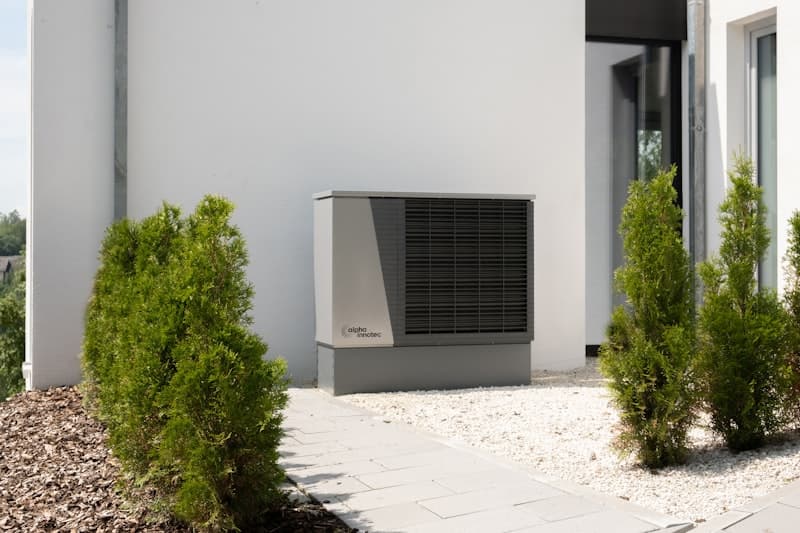
A heat pump extracts warmth from the air outside (or the ground) and concentrates it to heat your home. It runs on electricity, not gas. The key number is the Coefficient of Performance (COP): for every 1 kWh of electricity a heat pump uses, it produces around 2.8 to 3.5 kWh of heat. In UK conditions, most systems average about 3.0 across the year.
That means a heat pump is roughly three times more efficient than a gas boiler at converting energy into warmth. A gas boiler turns 1 kWh of gas into about 0.9 kWh of heat. A heat pump turns 1 kWh of electricity into about 3 kWh of heat.
For a fuller explanation, see our heat pump guide.
Why the government is pushing heat pumps
The logic is straightforward. Gas boilers burn fossil fuel in your home. Heat pumps run on electricity. The UK electricity grid is already around 55% low-carbon (wind, solar, nuclear) and that share is growing every year. As the grid gets cleaner, every heat pump in the country gets greener automatically, without the homeowner doing anything.
The government's target is 600,000 heat pump installations per year by 2028. In 2024, the actual number was around 55,000. So there is a very large gap between ambition and reality.
To close that gap, the government is using three main tools:
- Grants. The Boiler Upgrade Scheme gives £7,500 off a heat pump to any homeowner in England or Wales. No means test. Over 88,000 homes have used it so far.
- Regulation. The Future Homes Standard, expected from 2025, will require new-build homes to produce 75-80% fewer carbon emissions. In practice, that means no new gas boilers in new homes from around 2035.
- The Warm Homes Plan. Launched January 2026, this provides up to £30,000 of free upgrades (including heat pumps) for lower-income households.
Will gas boilers be banned?
This is the question most people actually want answered. The short version: nobody is coming to rip out your gas boiler.
What is happening is a gradual phase-out of new installations. The 2035 date applies to new-build homes. There is no confirmed date for banning gas boiler replacements in existing homes, though the direction is clear.
If your gas boiler breaks down tomorrow, you can still replace it with another gas boiler. But there are two things worth considering:
- A new gas boiler costs £2,000 to £4,000. After the BUS grant, a heat pump could cost a similar amount. The grant will not be available forever.
- Gas prices have been volatile since 2022. Electricity prices are more stable and are expected to fall relative to gas as more renewable generation comes online.
What does this mean for your heating bill?
At current Ofgem rates (Q2 2026), gas costs 5.74p/kWh and electricity costs 24.67p/kWh. That is a ratio of about 4.3 to 1. A heat pump with a COP of 3.0 effectively pays 24.67 ÷ 3 = 8.2p per kWh of heat produced. A gas boiler at 90% efficiency pays 5.74 ÷ 0.9 = 6.4p per kWh of heat.
So at standard rates, a heat pump costs roughly 40% more to run than gas. That is an honest number, and it is important to know.
The financial case for a heat pump is not about cheaper running costs at today's standard rates. It is about:
- The £7,500 grant. This is real money, available now, with no income test.
- Heat pump electricity tariffs. Some suppliers offer rates around 15p/kWh for heat pump owners. At that rate, the cost per kWh of heat drops to 5p, which is cheaper than gas.
- Future energy prices. The government has signalled it wants to shift levies from electricity bills to gas bills, which would narrow the price gap.
- Solar pairing. If you add solar panels, you can generate your own electricity and run the heat pump for close to free during daylight hours.
For the full running cost breakdown, see our heat pump vs solar article.
The timeline
What should you actually do?
Nobody needs to rush. But the grants available right now are unusually generous, and they will not last forever. If you are thinking about it:
- 1Check your EPC. Enter your postcode and we will show you your current rating, what improvements are recommended, and what they could save you.
- 2Insulate first. A heat pump works best in a well-insulated home. Check if you qualify for free insulation through GBIS or ECO4.
- 3Get heat pump quotes. Use an MCS-certified installer. They will handle the BUS grant application. Get at least three quotes.
See what your home could save
Enter your postcode to see your EPC rating, recommended improvements, and estimated savings.
Check your home